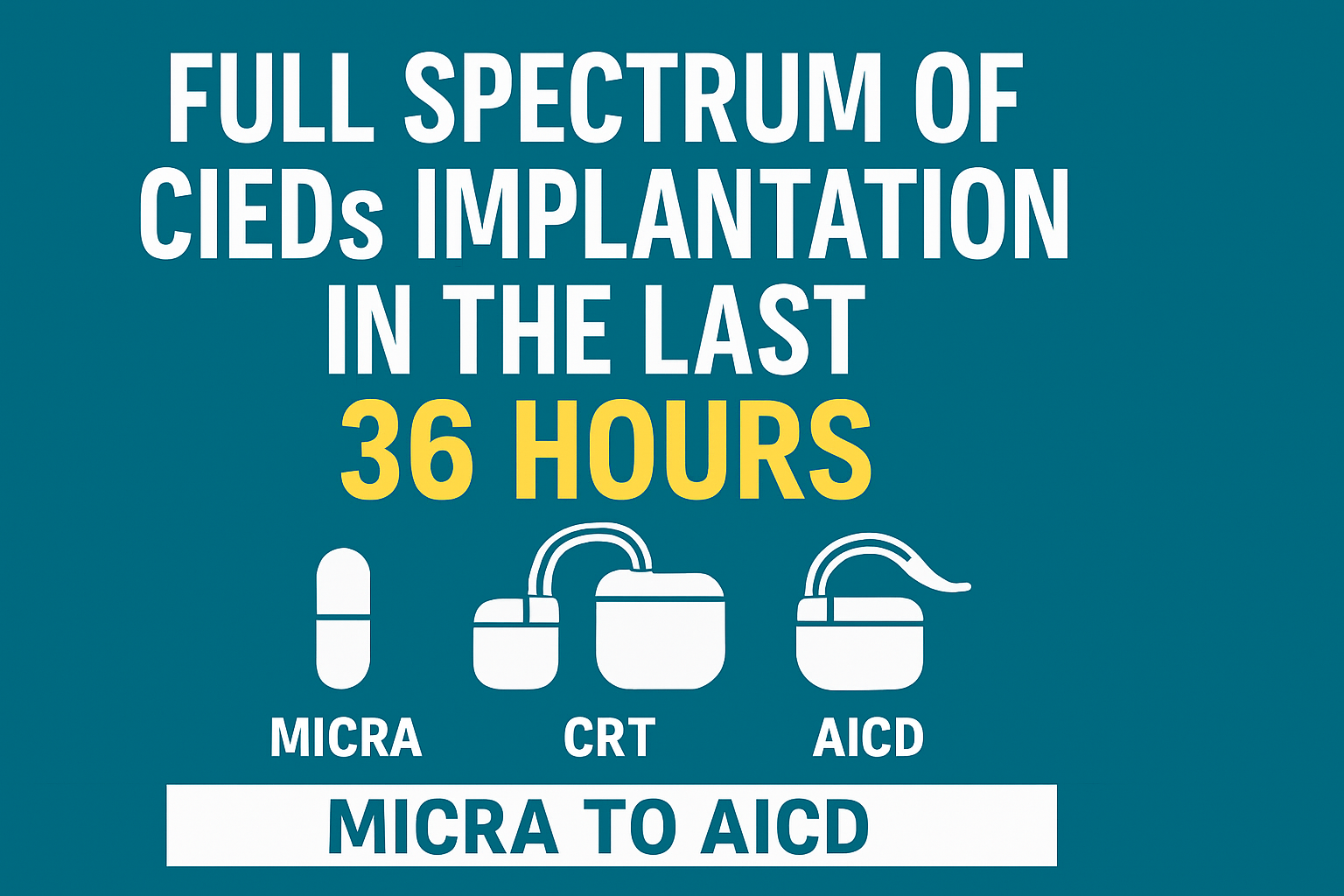
In the rapidly advancing field of cardiac care, Cardiac Implantable Electronic Devices (CIEDs) have become essential tools in managing a variety of heart rhythm disorders. Recently, our center witnessed a rare and intensive 36-hour span during which multiple CIEDs were implanted across different patient profiles, ranging from leadless pacemakers to advanced defibrillators and conduction system pacing devices. This blog provides general information about these procedures and how they support different cardiac conditions.
Understanding Different Types of CIEDs
Cardiac Implantable Electronic Devices include various tools used to manage arrhythmias, heart failure, and risk of sudden cardiac death. Here are the main types:
- Leadless Pacemaker (e.g., MICRA): A minimally invasive device placed directly inside the heart to help manage slow heart rhythms.
- Left Bundle Branch Pacing (LBBP): A modern pacing technique that provides physiological pacing by targeting the left bundle branch of the heart.
- Cardiac Resynchronization Therapy with Defibrillator (CRT-D): A device that coordinates heartbeats and provides shock therapy if dangerous rhythms occur, often used in heart failure patients.
- Automated Implantable Cardioverter Defibrillator (AICD): A lifesaving device that detects and treats potentially fatal arrhythmias like ventricular tachycardia or fibrillation.
What Happens During a CIED Implantation?
The procedures generally involve:
- Pre-procedural imaging and cardiac evaluation
- Local or conscious sedation
- Venous access to position leads (except leadless devices)
- Device placement and testing
- Post-procedure monitoring and discharge within 24–72 hours
Common Indications for CIEDs
- Bradycardia or heart block
- Heart failure with reduced ejection fraction
- Risk of sudden cardiac arrest
- Arrhythmias like ventricular tachycardia (VT)
Why Timely Implantation Matters
Early identification and implantation of the appropriate device can prevent complications, improve quality of life, and in many cases, extend life expectancy. Devices are selected based on patient age, comorbidities, cardiac history, and risk of arrhythmias.
Recent Highlights
In a recent high-intensity session at our facility, multiple CIEDs were implanted in quick succession, each aligned with the patient’s clinical needs:
- MICRA in an elderly patient with multiple comorbidities
- LBBP in a patient with pacing-induced cardiomyopathy
- CRT-D in an ischemic cardiomyopathy case
- AICD for primary prevention in a patient with inflammatory cardiomyopathy and a VT episode
Each case demonstrated the diverse role of device therapy in managing complex cardiac patients.
Watch the Procedure Video
Conclusion
The field of cardiac electrophysiology is evolving rapidly. CIEDs, ranging from the compact MICRA to sophisticated defibrillator systems, offer hope and safety to patients across all age groups. Whether it’s managing heart failure or preventing sudden cardiac death, these technologies play a vital role in modern medicine.
If you or a loved one has been advised to consider a CIED, consult with a specialist to understand your options. Each case is unique and deserves a personalized treatment approach.
Frequently Asked Questions (FAQs)
Q1: What is a CIED?
A CIED (Cardiac Implantable Electronic Device) is a device implanted in the body to regulate abnormal heart rhythms. Common types include pacemakers, defibrillators, and resynchronization devices.
Q2: Is the procedure painful?
Most patients experience minimal discomfort. The procedure is done under local anesthesia or conscious sedation. Recovery is usually quick.
Q3: How long do CIEDs last?
Depending on the type and usage, most devices last between 5 to 15 years. Regular checkups help ensure proper functioning.
Q4: Can I travel or pass through airport security with a CIED?
Yes, but inform airport security that you have a device. Carry your device identification card at all times.
Q5: Will I feel the shocks from an ICD?
You won’t feel anything unless the device delivers a shock, which may feel like a strong jolt. This only happens if a dangerous heart rhythm is detected.
Q6: Are there risks involved in CIED implantation?
As with any procedure, risks exist—like bleeding, infection, or lead displacement—but they are generally low, especially in experienced hands.
Q7: What follow-up is needed after implantation?
Regular follow-up visits will be scheduled to monitor the device and battery status, and to make any needed adjustments.