Introduction
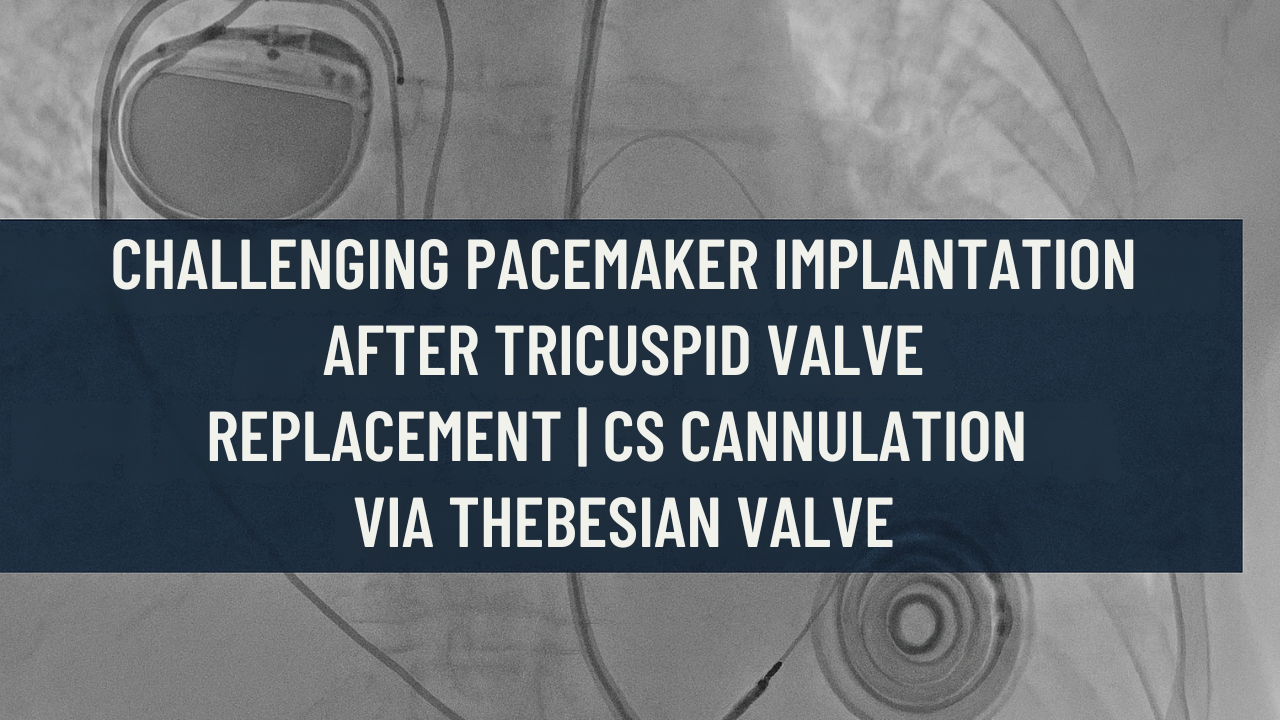
Permanent pacemaker implantation is generally a standard cardiovascular procedure. However, anatomical variations and prior surgical interventions can introduce significant complexity. This case report presents a middle-aged female patient who required permanent pacing following bioprosthetic tricuspid valve replacement. The procedure was further complicated by the presence of a Thebesian valve at the coronary sinus (CS) ostium.
Clinical Summary
- Patient Profile: Middle-aged female
- Diagnosis: Atrial Septal Defect (ASD) with severe Tricuspid Regurgitation (TR)
- Etiology: Organic tricuspid valve disease
- Clinical Presentation: Dyspnea, generalized fatigue, and peripheral edema
- Intervention: Surgical closure of ASD and replacement of the tricuspid valve with a bioprosthetic prosthesis
Postoperative Complication
- Developed complete heart block (CHB) on postoperative day one
- Demonstrated pacemaker dependency
- Indication for permanent pacemaker implantation was established
Technical Challenge: Lead Placement Strategy
- Transvenous right ventricular lead placement was contraindicated due to the bioprosthetic tricuspid valve
- Risk factors: mechanical damage, impaired valve function, and lead entrapment
- Alternative approach: lead placement in a coronary sinus branch
Anatomical Insight: Coronary Sinus and Thebesian Valve
- Coronary Sinus (CS): Major venous drainage structure on the posterior heart surface; an accessible route for alternative ventricular pacing
- Thebesian Valve: A membranous structure guarding the CS ostium; in this case, it significantly impeded catheter entry
Procedural Approach and Tools
- Equipment Utilized:
- AL2 diagnostic catheter – facilitated directional control
- Terumo guidewire – enabled delicate negotiation through the obstructed CS ostium
- Procedure:
- Navigated past the Thebesian valve using AL2 and Terumo system
- Performed venography to visualize and assess CS tributaries
- Selected the posterolateral vein as the lead implantation site
- Secured and tested the lead with optimal pacing parameters
Clinical Outcome
- Achieved effective ventricular pacing with satisfactory sensing and threshold values
- No interference with the prosthetic valve
- The patient had an uneventful recovery and was discharged in stable condition
Key Takeaways
- Anatomical Preparedness: Anticipate anatomical variants such as a prominent Thebesian valve during pre-procedural planning
- Avoid Prosthetic Valve Compromise: Endocardial leads should be routed to avoid transvalvular paths whenever possible
- Utilization of Specialized Tools: Catheter-wire systems like AL2 and Terumo are valuable in challenging access situations
- Multidisciplinary Coordination: Optimal outcomes are achieved through collaborative efforts between cardiac electrophysiologists, imaging specialists, and surgical teams
Frequently Asked Questions (FAQs)
1. Why is traditional trans-tricuspid lead placement contraindicated in this scenario?
Passing a lead through a prosthetic tricuspid valve increases the risk of mechanical damage and may compromise valve function.
2. What is the clinical significance of the Thebesian valve?
This anatomical variant can obstruct coronary sinus access, complicating procedures that require CS cannulation.
3. Why choose the coronary sinus for pacing lead placement?
The CS offers an alternative route for ventricular pacing, especially in patients where tricuspid access is not advisable.
4. What tools are effective for CS access in the presence of obstruction?
Guidewires with high maneuverability, such as the Terumo wire, and directional catheters like the AL2 are highly effective.
5. Is CS lead placement considered safe?
When performed by experienced clinicians using appropriate imaging guidance, it is a safe and effective technique.
6. Are these procedures widely available?
Due to the technical complexity, such procedures are best performed in tertiary care centers with specialized equipment and expertise.
7. What is the long-term prognosis following CS-based pacing?
With correct lead placement and device function, patients generally experience excellent outcomes and sustained symptom relief.