By Dr. M.S. Chandramouli
Consultant Cardiologist | Cardiac Electrophysiologist & Device Specialist
Yashoda Hospitals, Secunderabad
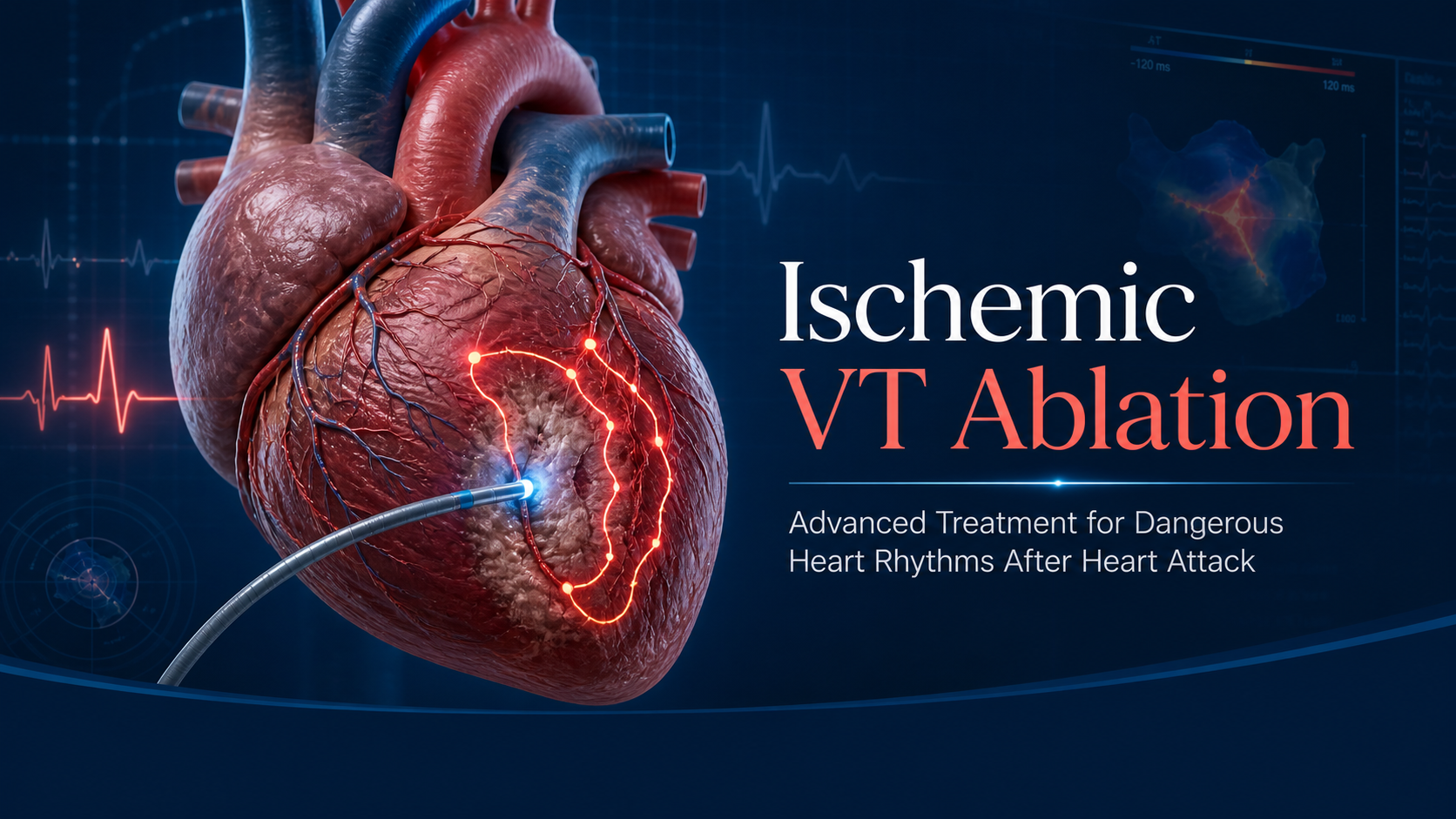
A heart attack can damage the heart in more ways than one. While most people understand that a heart attack affects blood flow to the heart muscle, fewer people know that it can also disturb the heart’s electrical system. One of the most serious rhythm problems that can develop after a heart attack is Ischemic Ventricular Tachycardia, commonly known as Ischemic VT.
Ischemic VT is a fast and potentially dangerous heart rhythm that begins in the lower chambers of the heart, called the ventricles. It usually develops in patients who have had a previous heart attack or significant coronary artery disease. In many cases, the damaged area of the heart forms scar tissue. This scar can interfere with normal electrical signals and create abnormal electrical circuits that trigger rapid heartbeats.
For some patients, VT may cause palpitations or dizziness. For others, it can lead to fainting, repeated shocks from an implanted defibrillator, heart failure worsening, or even sudden cardiac arrest. This is why timely diagnosis and expert treatment are extremely important.
One of the most advanced treatment options for recurrent ischemic VT is VT ablation. This procedure targets the abnormal electrical pathway responsible for the dangerous rhythm and helps reduce future episodes.
What Is Ischemic Ventricular Tachycardia?
The term ischemic means reduced blood supply. In the heart, ischemia commonly occurs due to blockages in the coronary arteries. When blood supply is severely reduced, a heart attack may occur. After a heart attack, the damaged part of the heart muscle may heal by forming scar tissue.
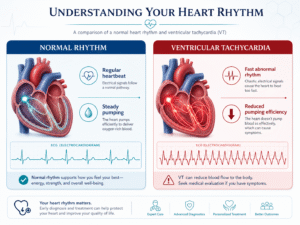
This scar tissue does not behave like normal heart muscle. It may slow down or block electrical signals in certain areas. Sometimes, these signals find a way to move around the scar in a circular pattern, creating a loop. This loop can repeatedly activate the ventricles at a very fast rate, resulting in ventricular tachycardia.
In simple words, ischemic VT is a dangerous fast rhythm that often comes from an old heart attack scar.
Why Is VT Dangerous?
The ventricles are responsible for pumping blood from the heart to the rest of the body. When the ventricles beat too fast, they do not get enough time to fill properly with blood. As a result, the heart may not pump effectively.
This can cause symptoms such as:
- Sudden fast heartbeat
- Chest discomfort
- Breathlessness
- Dizziness
- Sweating
- Fainting
- Extreme weakness
- Sudden collapse
In patients with weak heart pumping function, VT can be especially dangerous. If the rhythm does not stop quickly, it may progress to ventricular fibrillation, a life-threatening rhythm that can lead to sudden cardiac arrest.
This is why many high-risk patients are advised to have an Implantable Cardioverter Defibrillator, also called an ICD. An ICD can detect dangerous rhythms and deliver a shock to restore normal rhythm. However, while an ICD can save life, it does not always prevent VT from happening again. Repeated ICD shocks can be painful, stressful, and emotionally disturbing for patients.
This is where VT ablation plays an important role.
What Is Ischemic VT Ablation?
Ischemic VT ablation is a minimally invasive heart rhythm procedure performed by a cardiac electrophysiologist. The aim is to identify and treat the abnormal electrical circuits inside the heart that are causing VT.
During the procedure, thin flexible tubes called catheters are inserted through blood vessels, usually from the groin, and guided into the heart. Advanced 3D mapping systems are used to study the heart’s electrical activity in detail. These systems help locate the scar areas, slow electrical channels, and critical points responsible for the VT.
Once the abnormal circuit is identified, radiofrequency energy is delivered through the catheter to carefully modify the tissue causing the rhythm problem. This helps block the abnormal electrical pathway and reduce the chance of VT recurring.
The goal of VT ablation is not to remove the entire scar. Instead, the aim is to target the key electrical channels within or around the scar that allow VT to continue.
When Is VT Ablation Recommended?
VT ablation may be recommended for patients who have:
- Recurrent VT despite medications
- Frequent ICD shocks
- VT storm, where multiple VT episodes occur within a short period
- Poor tolerance to antiarrhythmic medicines
- Scar-related VT after a previous heart attack
- Repeated hospital visits due to rhythm episodes
- Reduced quality of life because of fear of sudden rhythm events
In some selected patients, VT ablation may also be considered earlier to reduce the burden of arrhythmia and prevent repeated ICD therapies.
The decision depends on several factors, including the patient’s heart function, previous heart attack history, ICD data, medication response, overall health, and the type of VT.
How Is the Procedure Planned?
VT ablation requires careful planning because most patients with ischemic VT have underlying structural heart disease. Before the procedure, the doctor may advise a detailed evaluation, which can include:
- ECG
- Echocardiogram
- Holter monitoring
- ICD interrogation, if the patient already has a device
- Coronary angiogram, if required
- Cardiac MRI or CT in selected cases
- Blood tests
- Review of previous heart attack, angioplasty, bypass surgery, or stent history
This evaluation helps the electrophysiologist understand the heart’s structure, pumping function, scar location, and rhythm pattern.
In patients with very weak heart function or unstable VT, additional precautions may be needed. The procedure may be planned with anesthesia support and advanced monitoring to ensure patient safety.
What Happens During VT Ablation?
The procedure is performed in a specialized electrophysiology lab. The patient may be given sedation or general anesthesia depending on the complexity of the case.
The electrophysiologist inserts catheters through blood vessels and guides them to the heart. A detailed electrical map of the ventricle is created. This map shows healthy tissue, scar tissue, and abnormal electrical pathways.
Sometimes, the VT is intentionally induced in a controlled environment so that the exact circuit can be mapped. In patients where VT is too unstable to map during the rhythm, the doctor may use a substrate-based approach. This means the scar and abnormal electrical channels are mapped during normal rhythm.
After identifying the target areas, ablation energy is delivered. The doctor may then test whether the VT can still be triggered. The aim is to eliminate or significantly reduce the abnormal rhythm circuit.
Because ischemic VT can be complex and may involve multiple circuits, the procedure may take several hours.
Benefits of Ischemic VT Ablation
VT ablation can offer important benefits for suitable patients. These may include:
- Reduction in recurrent VT episodes
- Fewer ICD shocks
- Reduced hospital visits
- Better rhythm control
- Improved confidence in daily life
- Better quality of life
- Possible reduction in dependence on high-dose rhythm medications in selected cases
For many patients, repeated ICD shocks create fear and anxiety. They may worry about walking, travelling, sleeping, or being alone. Successful VT ablation can help reduce this fear by lowering the frequency of rhythm episodes.
However, it is important to understand that VT ablation is not always a complete cure. Some patients may still need medications, ICD support, heart failure treatment, and regular follow-up.
Does VT Ablation Replace an ICD?
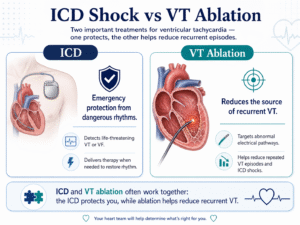
In most high-risk ischemic VT patients, VT ablation does not replace the ICD. The ICD remains an important safety device, especially in patients with reduced heart pumping function.
The ICD is designed to save life when a dangerous rhythm occurs. Ablation is designed to reduce the chances of that rhythm happening again.
A simple way to understand this is:
The ICD is the emergency protection system. VT ablation is the treatment that tries to reduce the need for that emergency protection.
Both treatments may work together as part of a complete rhythm management plan.
Is VT Ablation Safe?
VT ablation is an advanced procedure and should be performed by an experienced electrophysiology team. Like any invasive heart procedure, it has risks. These may include bleeding, blood vessel injury, heart perforation, stroke, worsening arrhythmia, kidney-related issues, or anesthesia-related complications.
The risk varies from patient to patient. It depends on age, heart pumping function, scar burden, other medical conditions, and the severity of VT.
Before the procedure, the doctor will explain the benefits, risks, expected outcomes, and alternative treatment options. Careful patient selection and advanced procedural planning are essential for safety.
Recovery After VT Ablation
After the procedure, the patient is monitored in the hospital. The medical team checks heart rhythm, blood pressure, access site healing, and overall recovery. If the patient has an ICD, the device may be checked and reprogrammed if needed.
Some patients may go home within a few days, while others may require longer monitoring, especially if they had VT storm, heart failure, or complex heart disease.
Follow-up care is very important. The doctor may advise regular ECGs, Holter monitoring, ICD checks, medicine adjustments, and heart failure management.
Lifestyle and cardiac risk factor control are also essential. Patients should continue managing diabetes, blood pressure, cholesterol, smoking, weight, diet, and physical activity as advised by their cardiologist.
VT ablation treats the rhythm circuit, but complete cardiac care protects the heart in the long term.
Why Expert Electrophysiology Care Matters
Ischemic VT is not just a simple fast heartbeat. It is often linked to previous heart attack, scarred heart muscle, weak pumping function, coronary artery disease, and electrical instability.
Managing this condition requires expertise in heart rhythm disorders, advanced mapping systems, ICD therapy, antiarrhythmic medications, and cardiac risk assessment.
An electrophysiologist is a cardiologist who specializes in the electrical system of the heart. For patients with recurrent VT, repeated ICD shocks, fainting episodes, or rhythm-related symptoms after a heart attack, consultation with an electrophysiologist can be extremely valuable.
Ischemic ventricular tachycardia is a serious heart rhythm disorder that often develops because of scar tissue after a heart attack. It can cause palpitations, dizziness, fainting, ICD shocks, and in severe cases, sudden cardiac arrest.
The good news is that modern treatment has advanced significantly. With ICD therapy, medications, advanced 3D mapping, and catheter ablation, many patients can achieve better rhythm control and improved quality of life.
If you or your loved one has a history of heart attack, ICD shocks, recurrent palpitations, fainting, or diagnosed VT, do not ignore it. Early evaluation by a cardiac electrophysiologist can help identify the right treatment plan and reduce future risk.
For expert evaluation and advanced treatment of complex heart rhythm disorders, consult Dr. M.S. Chandramouli, Consultant Cardiologist, Cardiac Electrophysiologist & Device Specialist at Yashoda Hospitals, Secunderabad.
FAQs on Ischemic Ventricular Tachycardia Ablation
1. What is ischemic ventricular tachycardia?
Ischemic ventricular tachycardia is a fast abnormal heart rhythm that starts in the lower chambers of the heart. It usually occurs in patients who have had a previous heart attack or coronary artery disease. Scar tissue from the damaged heart muscle can create abnormal electrical circuits that trigger VT.
2. Is ventricular tachycardia life-threatening?
Yes, sustained ventricular tachycardia can be life-threatening. It can reduce the heart’s ability to pump blood properly and may lead to fainting, cardiac arrest, or sudden cardiac death if not treated quickly.
3. What are the symptoms of VT?
Common symptoms include fast heartbeat, palpitations, dizziness, breathlessness, chest discomfort, fainting, sweating, weakness, or sudden collapse. Some patients with ICDs may experience shocks when VT occurs.
4. What is VT ablation?
VT ablation is a catheter-based procedure that identifies and treats abnormal electrical pathways in the heart. It uses advanced mapping and targeted energy delivery to reduce or eliminate the circuits causing ventricular tachycardia.
5. Who needs ischemic VT ablation?
Patients with recurrent VT, repeated ICD shocks, VT storm, poor response to medications, or scar-related VT after a heart attack may be considered for VT ablation.
6. Does VT ablation cure ventricular tachycardia permanently?
VT ablation can significantly reduce VT episodes, but it may not be a permanent cure for every patient. Some patients may still need medicines, ICD support, and regular follow-up.
7. Is VT ablation painful?
The procedure is usually done under sedation or general anesthesia, so patients generally do not feel pain during the procedure. Some mild discomfort or soreness may occur at the catheter insertion site after the procedure.
8. How long does VT ablation take?
The procedure may take several hours depending on the complexity of the scar, number of VT circuits, heart function, and overall patient condition.
9. Can VT ablation reduce ICD shocks?
Yes, one of the major goals of VT ablation is to reduce recurrent VT episodes and decrease the number of ICD shocks.
10. Do I still need an ICD after VT ablation?
Many patients with ischemic VT and reduced heart function still need an ICD even after ablation. The ICD acts as a safety device, while ablation reduces the chances of VT recurring.
11. What is VT storm?
VT storm means multiple episodes of ventricular tachycardia occurring within a short time. It is a serious condition and often requires urgent specialist care.
12. When should I see an electrophysiologist?
You should see an electrophysiologist if you have recurrent palpitations, fainting, VT diagnosis, ICD shocks, previous heart attack with rhythm symptoms, or repeated hospital visits due to abnormal heart rhythms.