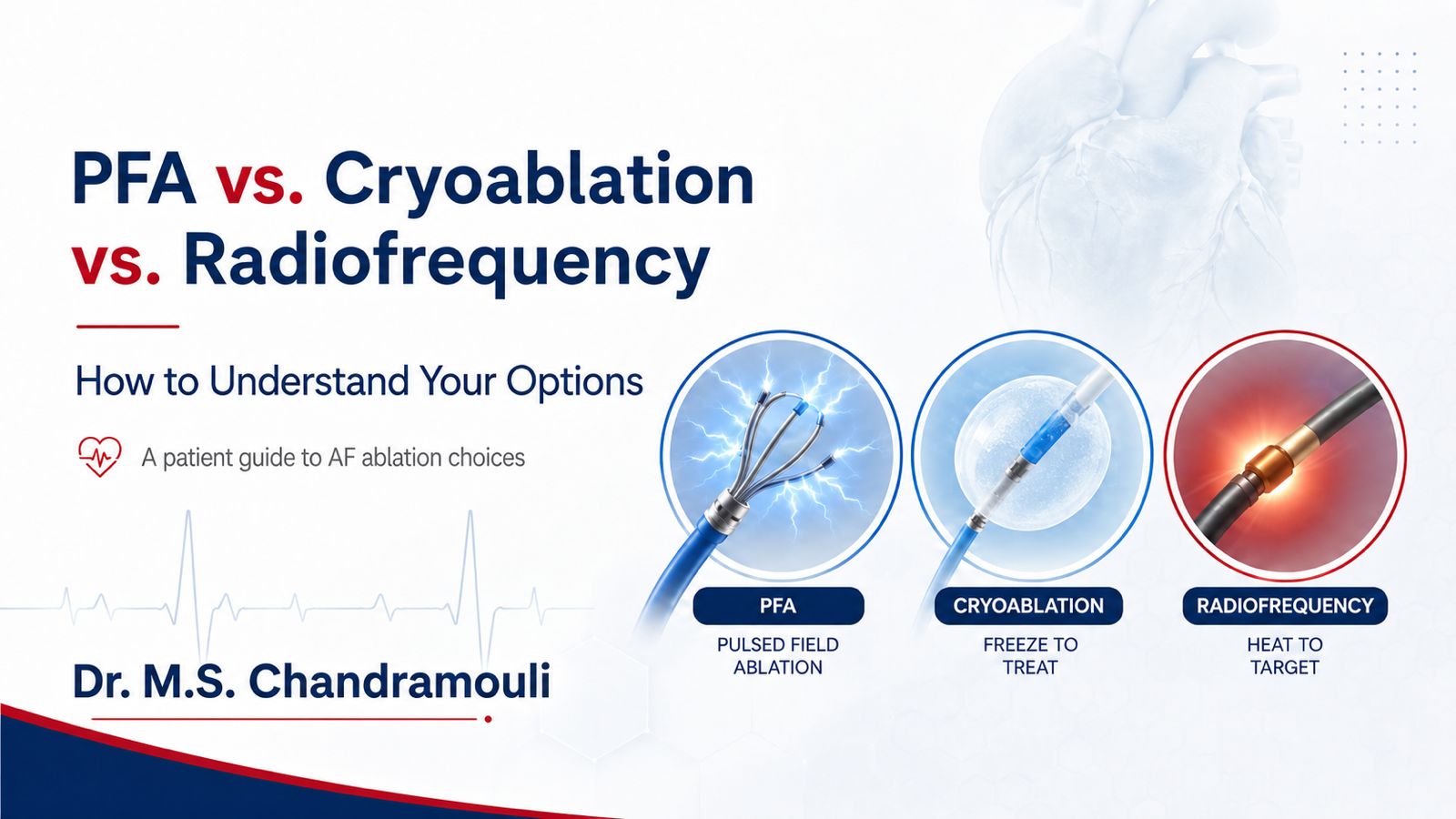
PFA vs. Cryoablation vs. Radiofrequency: How to Understand Your Options
When a patient is advised to undergo catheter ablation for atrial fibrillation, the next question is often not whether ablation can help. It is: “Which type of ablation should I choose?”
Pulsed field ablation (PFA), cryoballoon ablation and radiofrequency ablation all aim to electrically isolate the pulmonary veins, which are common sources of atrial fibrillation. The main difference is how each technology creates the treatment area inside the heart: PFA uses short electrical pulses, cryoablation uses extreme cold, and radiofrequency ablation uses controlled heat.
For many patients with paroxysmal atrial fibrillation, all three can be reasonable options. The best choice is not determined by which method is newest. It depends on the type of AF, the anatomy of the heart and pulmonary veins, whether this is a first or repeat procedure, the need for additional mapping, safety priorities, and the electrophysiology team’s experience with the selected system.
| Direct answer
PFA may reduce certain forms of collateral tissue injury because it is non-thermal. Cryoablation offers a standardised balloon-based approach with extensive clinical experience. Radiofrequency provides the greatest flexibility for customised, complex and repeat procedures. None is automatically best for every patient. |
What Is Catheter Ablation for Atrial Fibrillation?
Atrial fibrillation, also called AF or AFib, is an irregular rhythm arising from the upper chambers of the heart. In many patients, abnormal electrical impulses begin around the pulmonary veins, which carry blood from the lungs into the left atrium.
During catheter ablation, thin catheters are introduced through blood vessels, usually from the groin, and guided into the heart. The electrophysiologist creates a controlled ring of treatment around the pulmonary veins. This is called pulmonary vein isolation, or PVI. The goal is to block abnormal electrical signals from entering the atrium and triggering AF.
Pulmonary vein isolation aims to prevent abnormal signals around the pulmonary veins from triggering atrial fibrillation.
The Three Technologies at a Glance
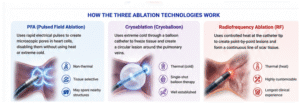
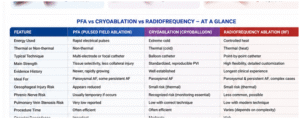
PFA uses electrical pulses, cryoablation uses cold, and radiofrequency ablation uses heat.
1. Pulsed Field Ablation (PFA)
Side-by-Side Comparison
Pulsed field ablation is a non-thermal technique. It delivers extremely brief electrical pulses that create microscopic pores in the membranes of targeted heart-muscle cells. When the exposure is sufficient, the affected cells are permanently disabled through a process called irreversible electroporation.
The main attraction of PFA is tissue selectivity. Heart-muscle cells appear to be more sensitive to the electrical field than several nearby structures. This may reduce injury to the oesophagus, pulmonary veins and phrenic nerve compared with techniques that rely on heating or freezing.
Potential advantages of PFA
- Non-thermal energy with reduced concern about heat- or cold-related collateral injury.
- Very low reported rates of clinically significant pulmonary vein narrowing.
- Low rates of persistent phrenic nerve injury in large clinical experience.
- Efficient pulmonary vein isolation in many first-time paroxysmal AF procedures.
- A growing evidence base showing effectiveness comparable with established thermal ablation in selected patients.
Important limitations of PFA
- PFA is newer, so long-term evidence is less extensive than for radiofrequency ablation.
- Different PFA devices use different catheters, waveforms and energy-delivery strategies; results from one platform do not automatically apply to every platform.
- Evidence is strongest for pulmonary vein isolation in paroxysmal AF, although experience in persistent AF is expanding.
- PFA does not remove the general risks of a catheter procedure, including bleeding, stroke, vascular injury and cardiac tamponade.
- Rare PFA-specific concerns, including coronary spasm and haemolysis during extensive energy delivery, require awareness and careful procedural planning.
2. Cryoballoon Ablation
Cryoablation uses extreme cold. A balloon catheter is positioned at the opening of a pulmonary vein and inflated to create contact. Freezing energy is then delivered to form a circular lesion around the vein and electrically isolate it.
Cryoballoon ablation is often described as a single-shot technique because a broad area around a pulmonary vein can be treated during one balloon application. It has a well-established role in paroxysmal AF and a relatively standardised workflow.
Potential advantages of cryoablation
- Well-established clinical experience and evidence for paroxysmal AF.
- A standardised balloon-based approach that can provide reproducible pulmonary vein isolation.
- Efficient treatment when pulmonary vein anatomy is suitable.
- Less point-by-point catheter movement than conventional radiofrequency workflows.
- A familiar and widely used option at many established electrophysiology centres.
Important limitations of cryoablation
- The phrenic nerve can be affected, particularly when treating the right-sided pulmonary veins. Monitoring is essential and most nerve weakness is temporary, but persistent injury can occur.
- Cryoablation is still a thermal technique. Injury to the oesophagus and nearby structures is uncommon but not impossible.
- The balloon is designed primarily for pulmonary vein isolation and is less flexible when a patient requires highly customised lesions or treatment of additional circuits.
- Some persistent AF, atypical flutter and repeat procedures may require additional mapping or another energy source.
3. Radiofrequency Ablation
Radiofrequency ablation uses controlled electrical energy to generate heat at the catheter tip. The electrophysiologist creates a series of small, connected lesions around the pulmonary veins. Modern systems may include three-dimensional mapping, contact-force sensing and lesion-quality measurements to improve precision and consistency.
The major strength of radiofrequency ablation is flexibility. The catheter can be positioned point by point, allowing the electrophysiologist to tailor treatment to an individual patient’s anatomy and electrical findings.
Potential advantages of radiofrequency ablation
- The longest clinical history and the deepest long-term evidence base.
- Highly customisable lesion placement guided by detailed electrical mapping.
- Useful when additional arrhythmias, atrial flutter or non-pulmonary-vein circuits require treatment.
- Often well suited to persistent AF, complex anatomy and repeat ablation procedures.
- Allows precise treatment of small conduction gaps identified during a repeat procedure.
Important limitations of radiofrequency ablation
- Because RF uses heat, there is a small risk of thermal injury to nearby structures, including the oesophagus.
- Durable isolation requires complete, connected lesions. Gaps can allow pulmonary veins to reconnect.
- The technique may be more operator-dependent and may require more extensive mapping.
- Procedure duration can vary according to the complexity of the lesion set and the number of arrhythmias being treated.
Side-by-Side Comparison
At-a-glance comparison. Individual recommendations depend on the patient, anatomy, AF pattern, technology and team experience.
Which Method Is Most Effective?
For a first ablation in many patients with paroxysmal atrial fibrillation, PFA, cryoballoon ablation and radiofrequency ablation can achieve broadly comparable rhythm-control outcomes when pulmonary vein isolation is performed completely and safely.
Major randomised evidence has shown that PFA can be non-inferior to conventional thermal ablation in selected patients with paroxysmal AF. Earlier randomised evidence also showed that cryoballoon ablation can be non-inferior to radiofrequency ablation for drug-refractory paroxysmal AF. These findings support the idea that the technology name alone is not the strongest predictor of success.
The chance of long-term rhythm control is also influenced by the duration and type of AF, left atrial size, atrial scarring, heart function, obesity, sleep apnoea, hypertension, diabetes, alcohol intake, thyroid disease and whether risk factors are actively treated.
Which Method Has the Best Safety Profile?
Safety must be understood in two parts: risks caused by the energy source and risks caused by performing a catheter procedure inside the heart.
Energy-related safety
PFA appears to reduce several forms of collateral tissue injury because it does not rely on heat or freezing. Cryoablation has a recognised phrenic nerve risk, particularly near the right pulmonary veins. Radiofrequency has a small heat-related risk near the oesophagus and other adjacent structures. Modern techniques, monitoring and operator experience have improved the safety of both thermal methods.
Risks shared by all three approaches
- Bleeding, bruising or vascular injury at the groin access site.
- Pericardial effusion or cardiac tamponade from perforation of the heart.
- Stroke or transient ischaemic attack from clot or air entering the circulation.
- Infection and anaesthesia-related complications.
- Recurrence of AF, atrial flutter or atrial tachycardia.
- The possibility of needing cardioversion, medication or a repeat procedure.
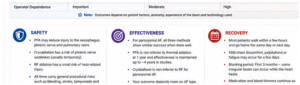
Safety, effectiveness and recovery must be considered together rather than choosing on one feature alone.
Which Procedure Is Faster?
PFA often allows rapid energy delivery, and many PFA workflows are efficient. Cryoballoon ablation can also be efficient because a broad circular area is treated with each balloon application. Radiofrequency creates lesions point by point, but modern mapping and energy-delivery strategies have shortened many procedures.
Total laboratory time includes anaesthesia, vascular access, transseptal puncture, mapping, anticoagulation, catheter positioning and confirmation of isolation. Faster energy delivery does not automatically mean a safer or more durable procedure for a particular patient.
Which Option Is Better for Paroxysmal AF?
Paroxysmal AF begins and stops on its own, usually within seven days. In a patient undergoing a first ablation where pulmonary vein isolation is the main goal, all three technologies may be reasonable.
PFA may be considered when
- A non-thermal treatment approach is preferred.
- Reducing collateral thermal injury is a major priority.
- The centre has substantial experience with the specific PFA system.
- Straightforward pulmonary vein isolation is the primary procedural goal.
Cryoablation may be considered when
- A standardised balloon-based approach is suitable.
- Pulmonary vein anatomy is appropriate for balloon occlusion.
- The centre has a high-volume cryoballoon programme.
- A reproducible pulmonary vein isolation workflow is preferred.
Radiofrequency may be considered when
- Detailed mapping and highly customised treatment are useful.
- Additional atrial flutter or tachycardia needs to be treated.
- The anatomy is less suitable for a balloon approach.
- The team has extensive experience with modern RF techniques.
Which Option Is Better for Persistent AF?
Persistent AF lasts longer than seven days and often reflects more advanced electrical and structural changes in the atria. Pulmonary vein isolation remains central, but some patients have additional circuits, scar or atrial tachycardia that require mapping and a broader strategy.
Radiofrequency has the longest experience and the greatest flexibility for customised lesions in persistent AF. PFA is increasingly used and studied in this group, but the evidence and approved workflows can differ between devices. Cryoballoon can achieve pulmonary vein isolation, although additional treatment may be required when abnormalities extend beyond the veins.
| Key point for persistent AF
The treatment strategy and quality of mapping may matter more than choosing one energy source. A hybrid approach may sometimes be appropriate when different parts of the procedure require different tools. |
Which Option Is Better for a Repeat Ablation?
AF can recur because a pulmonary vein has reconnected, the atrial disease has progressed, or a new flutter or tachycardia circuit has developed. Repeat procedures therefore often begin with careful mapping to identify the exact cause.
Radiofrequency is frequently useful because it can target a small conduction gap or a complex circuit precisely. PFA may also be used for selected repeat procedures, depending on the device, anatomy and findings. A repeat balloon procedure may be suitable when broad vein re-isolation is required, but it is generally less flexible for a small focal gap or a complex non-pulmonary-vein circuit.
Who May Benefit Most From Each Option?
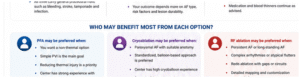
The best technology is the one that matches the patient’s AF pattern, anatomy, procedural needs and the team’s experience.
What Matters More Than the Technology Name?
Correct diagnosis and patient selection: The rhythm should be documented, symptom burden assessed and the likely benefit of rhythm control discussed before ablation.
Experience with the selected system: Familiarity with a particular catheter, mapping platform and complication-management protocol can be as important as the technology itself.
Durable pulmonary vein isolation: Whichever energy is used, the pulmonary veins must be safely and completely isolated.
Anticoagulation management: Careful blood-thinner management before, during and after the procedure is essential for stroke prevention.
Risk-factor control: Weight, blood pressure, diabetes, sleep apnoea, alcohol use, smoking and physical activity can strongly influence recurrence.
Structured follow-up: Symptoms alone may miss silent AF. ECGs, Holter monitoring or other rhythm monitoring may be advised after the procedure.
What Is Recovery Like?
Recovery is usually similar because all three approaches use catheter access through the groin. Many patients walk within several hours and may go home the same day or the following day, depending on hospital protocol, general health and procedural complexity.
Mild groin discomfort, bruising, fatigue, chest awareness and temporary palpitations can occur. Heavy lifting and strenuous exercise are usually restricted for several days. Individual instructions from the treating team should always take priority.
What Is the Blanking Period?
The first three months after ablation are commonly called the blanking period. The treated tissue is healing, and temporary inflammation can cause short episodes of AF, atrial flutter, atrial tachycardia or extra beats. These early episodes do not automatically mean the procedure has failed.
Antiarrhythmic medication may be continued temporarily, and symptoms should be reported. Rhythm monitoring helps the electrophysiologist distinguish expected healing-related events from clinically significant recurrence.
Can Blood Thinners Be Stopped After Ablation?
The choice between PFA, cryoablation and radiofrequency does not determine whether anticoagulation can be stopped. Blood thinners are generally continued during the early period after ablation, and long-term treatment is based mainly on the patient’s stroke-risk profile rather than the absence of symptoms alone.
Patients should never stop apixaban, rivaroxaban, dabigatran, edoxaban, warfarin or another prescribed anticoagulant without medical advice.
How Should Patients in Hyderabad and India Choose?
Patients comparing atrial fibrillation ablation options in Hyderabad, Secunderabad or elsewhere in India should ask for a personalised explanation rather than selecting a technology from an advertisement or headline. Availability, device choice and cost may vary between hospitals, but clinical suitability should be assessed first.
The consultation should review whether AF is paroxysmal or persistent, how long it has been present, left atrial size, heart function, pulmonary vein anatomy, previous ablation, other arrhythmias, stroke and bleeding risk, kidney and lung function, sleep apnoea, and the experience of the treating team.
Patients should also confirm which specific PFA, cryoballoon or RF system is proposed. Not all devices within the same category are identical, and outcomes depend on appropriate use of the particular platform.
Questions to Ask Your Electrophysiologist
- What type of atrial fibrillation do I have?
- Why are you recommending ablation at this stage?
- Why is PFA, cryoablation or radiofrequency most suitable for me?
- Which device or catheter system will be used?
- How experienced is the team with that specific system?
- Will only pulmonary vein isolation be performed?
- Are additional arrhythmias or areas likely to require treatment?
- What is the expected success rate in someone with my AF pattern and heart condition?
- What are the most important risks in my individual case?
- How will anticoagulation be managed?
- Will general anaesthesia or deep sedation be used?
- What happens if AF returns?
- Could more than one energy source be needed?
- What rhythm monitoring will I need after the procedure?
- Which lifestyle changes can improve the long-term result?
Frequently Asked Questions
Is PFA better than cryoablation?
PFA may reduce certain forms of collateral tissue injury because it is non-thermal. Cryoablation has a longer clinical history and remains an established, effective option for many patients with paroxysmal AF. The better choice depends on anatomy, procedural needs and team experience.
Is PFA better than radiofrequency ablation?
PFA offers a favourable non-thermal safety profile, while RF provides greater flexibility for complex mapping, persistent AF and repeat procedures. Neither is automatically superior for every patient.
Which ablation has the highest success rate?
For many first-time paroxysmal AF procedures, the three technologies can provide broadly comparable outcomes. AF type, atrial size, disease duration, risk factors and lesion durability often matter more than the energy source alone.
Which option is safest for the oesophagus?
Current evidence suggests PFA reduces clinically significant oesophageal injury compared with thermal approaches. However, all catheter procedures carry other risks and none should be described as risk-free.
Is cryoablation outdated?
No. Cryoballoon ablation remains a well-established and evidence-supported treatment, particularly for paroxysmal AF.
Which option is better for persistent AF?
Radiofrequency has the longest experience and greatest flexibility for complex lesion strategies. PFA evidence is expanding, and cryoballoon may be used for pulmonary vein isolation. The overall strategy should be personalised.
Can PFA and radiofrequency be used together?
Yes. In selected complex procedures, different energy sources may be used for different parts of the treatment, such as PFA for pulmonary vein isolation and RF for an additional mapped circuit.
Will I need another ablation?
Some patients need a repeat procedure regardless of the initial technology. Recurrence may result from pulmonary vein reconnection, progression of atrial disease or a new arrhythmia circuit.
Does the newest technology guarantee a better result?
No. Technology is only one part of the outcome. Correct patient selection, experienced operators, durable isolation, anticoagulation and risk-factor management are essential.
Is PFA available in Hyderabad?
Availability varies between hospitals and may change as new platforms are introduced. Patients should confirm the specific system available, whether it is appropriate for their condition, and the team’s experience with it.
The Honest Bottom Line
PFA, cryoablation and radiofrequency ablation are three ways of achieving the same central goal: safe and durable electrical isolation of the pulmonary veins, with additional treatment when needed.
PFA offers a promising non-thermal approach with an encouraging safety profile and rapidly expanding evidence. Cryoablation provides a standardised, well-established balloon-based method. Radiofrequency offers the longest evidence history and the greatest flexibility for complex, persistent and repeat procedures.
For many patients, more than one option may be clinically reasonable. The best choice is the technology that fits the patient’s type of atrial fibrillation, anatomy, treatment plan, safety priorities and the experience of the electrophysiology team.
| Patient takeaway
Do not choose an ablation method only because it is newer, faster or more heavily advertised. Ask why it is the right option for your specific heart rhythm problem. |
Consult Dr. M.S. Chandramouli
MD, DM, IDCCM, PDF(EP), ECDS
Consultant Electrophysiologist and Heart Failure Specialist
Yashoda Hospitals, Secunderabad
Medical disclaimer: This article is intended for patient education and general awareness. It does not replace a clinical examination, personalised medical advice or an individual treatment recommendation.