By Dr. M.S. Chandramouli
MD, DM, IDCCM, PDF(EP), ECDS
Consultant Electrophysiologist and Heart Failure Specialist
Yashoda Hospitals, Secunderabad
📞 For appointments: 9063420686
Introduction
Your heart isn’t just a pump—it’s a finely tuned electrical machine. But what happens when that electrical system goes haywire? One of the most common—and most dangerous—conditions that arises from this disruption is Atrial Fibrillation (AF).
This irregular rhythm can quietly raise your risk of stroke, heart failure, and death. But with expert intervention and modern technology, AF can be managed and even corrected. As a leading electrophysiologist in Hyderabad, I’ve helped hundreds of patients reclaim normalcy from this often-overlooked condition.
What is Atrial Fibrillation?
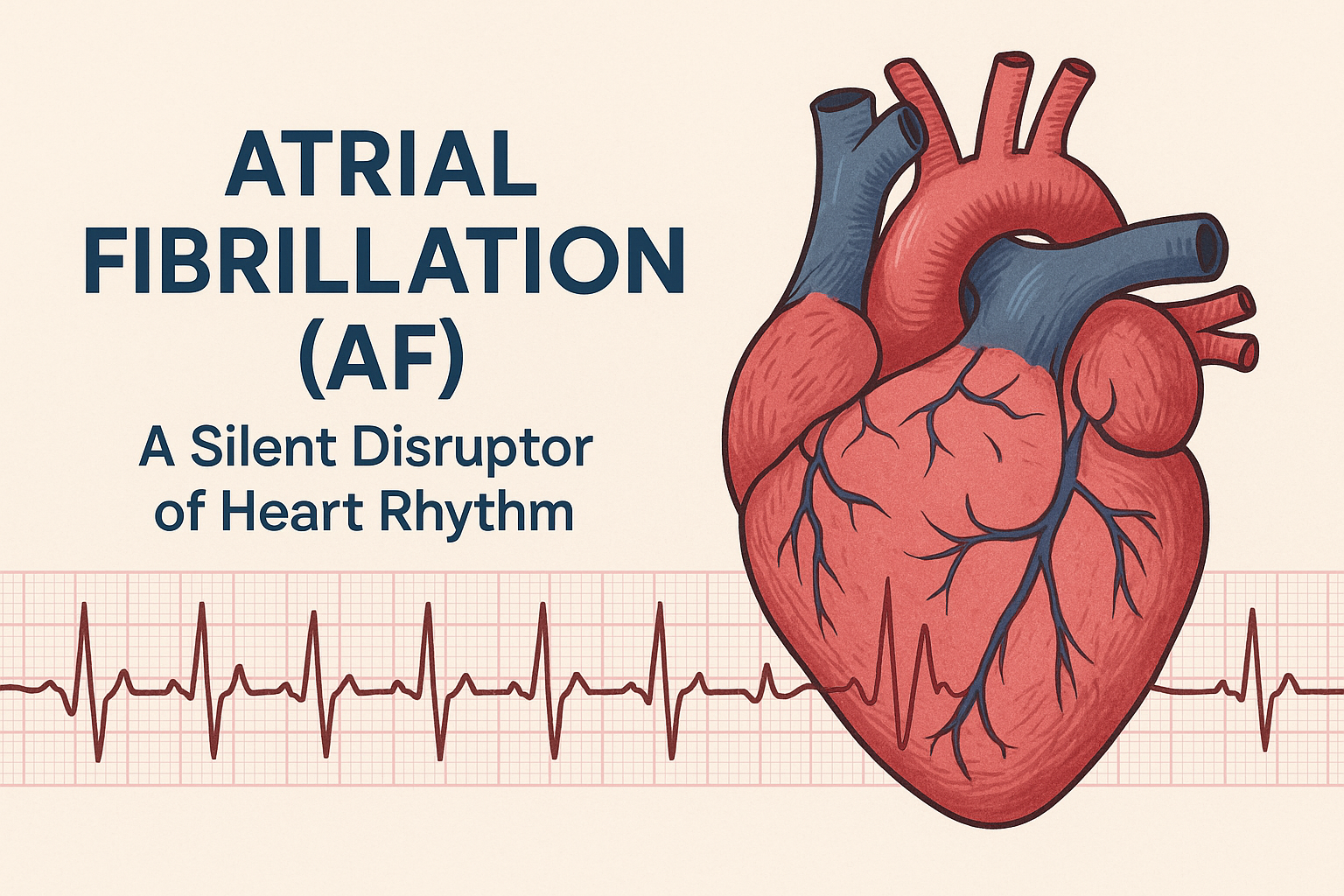
Atrial Fibrillation (AF) is an abnormal heart rhythm originating in the atria (the upper chambers of the heart). Instead of a steady, coordinated beat, the atria quiver rapidly and irregularly. As a result, blood doesn’t flow efficiently—this increases the chance of clot formation, which can travel to the brain and cause a stroke.
There are different types of AF:
-
Paroxysmal AF: Comes and goes on its own
-
Persistent AF: Lasts longer than 7 days
-
Long-standing persistent AF: Lasts more than 12 months
-
Permanent AF: Rhythm remains permanently irregular
Why Should You Take AF Seriously?
AF may start as an occasional flutter or a skipped beat. But left unchecked, it can spiral into severe health issues:
🔴 Fivefold increase in stroke risk
🔴 Threefold increase in heart failure risk
🔴 50% increase in risk of dementia and cognitive decline
🔴 Reduced quality of life with constant fatigue and anxiety
This makes early diagnosis and expert care vital—especially in a fast-paced metro like Hyderabad, where stress and sedentary lifestyles compound cardiac risks.
What Causes Atrial Fibrillation?
AF doesn’t have a single cause—it’s often the result of multiple factors working together:
✅ High blood pressure (Hypertension)
✅ Coronary artery disease
✅ Rheumatic heart disease (common in India)
✅ Heart valve defects or surgery
✅ Hyperthyroidism
✅ Obesity and sleep apnea
✅ Diabetes and metabolic syndrome
✅ Chronic alcohol or tobacco use
✅ Genetic predisposition or family history
In some cases, AF occurs even in the absence of structural heart disease—this is known as lone AF, especially common in younger individuals.
Common Symptoms of AF
AF can be tricky. Some people have intense symptoms; others feel nothing. But the most common symptoms include:
-
Irregular or rapid heartbeat
-
Palpitations (fluttering in the chest)
-
Shortness of breath (especially during exertion)
-
Unexplained fatigue or weakness
-
Dizziness or lightheadedness
-
Chest pain or discomfort
-
Anxiety or a sense of “something wrong”
Diagnosis: How We Uncover the Rhythm Disturbance
At Yashoda Hospitals – Secunderabad, we use a combination of advanced diagnostics to detect AF:
🔹 12-lead ECG – Quick snapshot of heart rhythm
🔹 Holter Monitor (24–72 hours) – Continuous rhythm tracking
🔹 Event recorder or implantable loop recorder – For intermittent symptoms
🔹 Echocardiogram – Assess structural heart health
🔹 EP Study (Electrophysiology Study) – Pinpoints electrical abnormalities inside the heart
Advanced Treatment of AF in Hyderabad
The management of AF focuses on:
-
Restoring normal rhythm (rhythm control)
-
Controlling heart rate (rate control)
-
Preventing stroke with anticoagulation
As an electrophysiologist in Hyderabad, I provide a full spectrum of treatment options:
1. Medical Management
Rate-control drugs like beta-blockers or calcium channel blockers help maintain a safe heart rate.
Antiarrhythmic drugs like flecainide or amiodarone may be prescribed to restore or maintain a normal rhythm.
Blood thinners (anticoagulants) such as warfarin, apixaban, or dabigatran help prevent strokes in AF patients.
✔️ We use CHA₂DS₂-VASc score to assess stroke risk and guide anticoagulation.
2. Catheter Ablation (Pulmonary Vein Isolation)
If medications don’t control AF—or if you prefer a long-term solution—catheter ablation is the most effective option.
🔸 Performed under sedation
🔸 Uses 3D mapping systems for accuracy
🔸 Ablates the faulty electrical circuits triggering AF
🔸 Minimally invasive, typically 1-day hospital stay
🔸 Improves quality of life and reduces long-term medication use
✔️ Success rates are highest when ablation is done early in the course of AF.
At Yashoda Hospitals, we offer state-of-the-art ablation procedures with international safety standards.
3. Cardioversion
An electrical shock delivered under controlled sedation to “reset” the heart’s rhythm. Often done before ablation or alongside medication therapy.
4. Left Atrial Appendage Closure (LAAC)
For patients who cannot take blood thinners long-term, a device-based approach like Watchman device helps prevent clot formation.
Holistic Approach to AF
AF isn’t just a heart condition—it’s a lifestyle condition. Here’s how we support long-term wellness:
-
Weight loss programs to reduce AF recurrence
-
Sleep apnea screening & treatment
-
Diet and alcohol intake counseling
-
Stress management and yoga-based cardiac rehab
-
Digital follow-ups and app-based monitoring
Why Choose Dr. M.S. Chandramouli?
As one of the few dual-trained experts in Electrophysiology and Heart Failure in Hyderabad, I specialize in complex arrhythmia management with a patient-first approach:
💠 Extensive experience in catheter ablation and device implantation
💠 Part of a dedicated EP team with access to international technology
💠 Tailored treatment plans for young and elderly patients
💠 Available for in-person and online consultations across Hyderabad
Patient Testimonials
🗣️ “I was tired of the constant breathlessness and irregular beats. After catheter ablation by Dr. Chandramouli, I’m off meds and back to playing tennis!” – Mr. Rao, 58, Hyderabad
🗣️ “My mother had silent AF and a minor stroke. With expert guidance and follow-up, her rhythm is now stable, and her life is back to normal.” – Praveen, Begumpet
Frequently Asked Questions (FAQs)
❓Is Atrial Fibrillation curable?
AF can be managed effectively and, in many cases, reversed with catheter ablation. Long-term freedom from AF depends on the type, duration, and associated conditions.
❓Do I need to be on blood thinners for life?
Not always. We assess stroke risk individually using tools like the CHA₂DS₂-VASc score. Some patients with successful ablation may be taken off anticoagulants under close monitoring.
❓Is catheter ablation safe?
Yes. When performed by an experienced electrophysiologist, the risks are minimal. At Yashoda Hospitals, we use advanced 3D mapping to maximize precision and minimize complications.
❓Can lifestyle changes really impact AF?
Absolutely. Weight loss, treating sleep apnea, avoiding alcohol, and stress reduction all significantly reduce AF burden.
❓What is the success rate of AF ablation?
Success rates for paroxysmal AF are 70–90%, and for persistent AF around 60–70%. Results improve when done early, before permanent changes set in.
Final Thoughts
Atrial Fibrillation may begin as a mere flutter—but its long-term consequences are far from harmless. The good news? With timely diagnosis, personalized treatment, and modern technology, AF is more manageable than ever before.
If you or your loved one is experiencing any signs of an irregular heartbeat, don’t delay. Seek expert evaluation and care from a trusted electrophysiologist in Hyderabad.
Book Your Consultation Today
📍 Dr. M.S. Chandramouli
Consultant Electrophysiologist & Heart Failure Specialist
Yashoda Hospitals, Secunderabad
📞 Call: 9063420686
📧 Book Online Appointment
-
Atrial fibrillation treatment in Hyderabad
-
AF specialist Hyderabad
-
Best electrophysiologist in Secunderabad
-
Catheter ablation Hyderabad
-
Irregular heartbeat doctor Hyderabad
-
Stroke prevention in AF Hyderabad
-
Dr. M.S. Chandramouli Yashoda Hospitals
-
Atrial fibrillation ablation Hyderabad
-
Top heart rhythm specialist Hyderabad