Heart rhythm disorders are becoming more commonly diagnosed today because people are more aware of symptoms such as dizziness, fatigue, fainting, slow heartbeat, breathlessness, and unexplained weakness. For many patients with a slow heart rhythm, a pacemaker can be life-changing. Traditionally, pacemakers have required a small device placed under the skin of the chest and one or more wires, called leads, that travel into the heart.
But cardiac rhythm technology is changing fast. One of the most modern advances in this field is the leadless pacemaker — a tiny, self-contained device placed directly inside the heart without traditional wires or a chest pocket. For patients searching for a Leadless Pacemaker in Hyderabad, this innovation represents an important step toward safer, smaller, and more patient-friendly heart rhythm treatment.
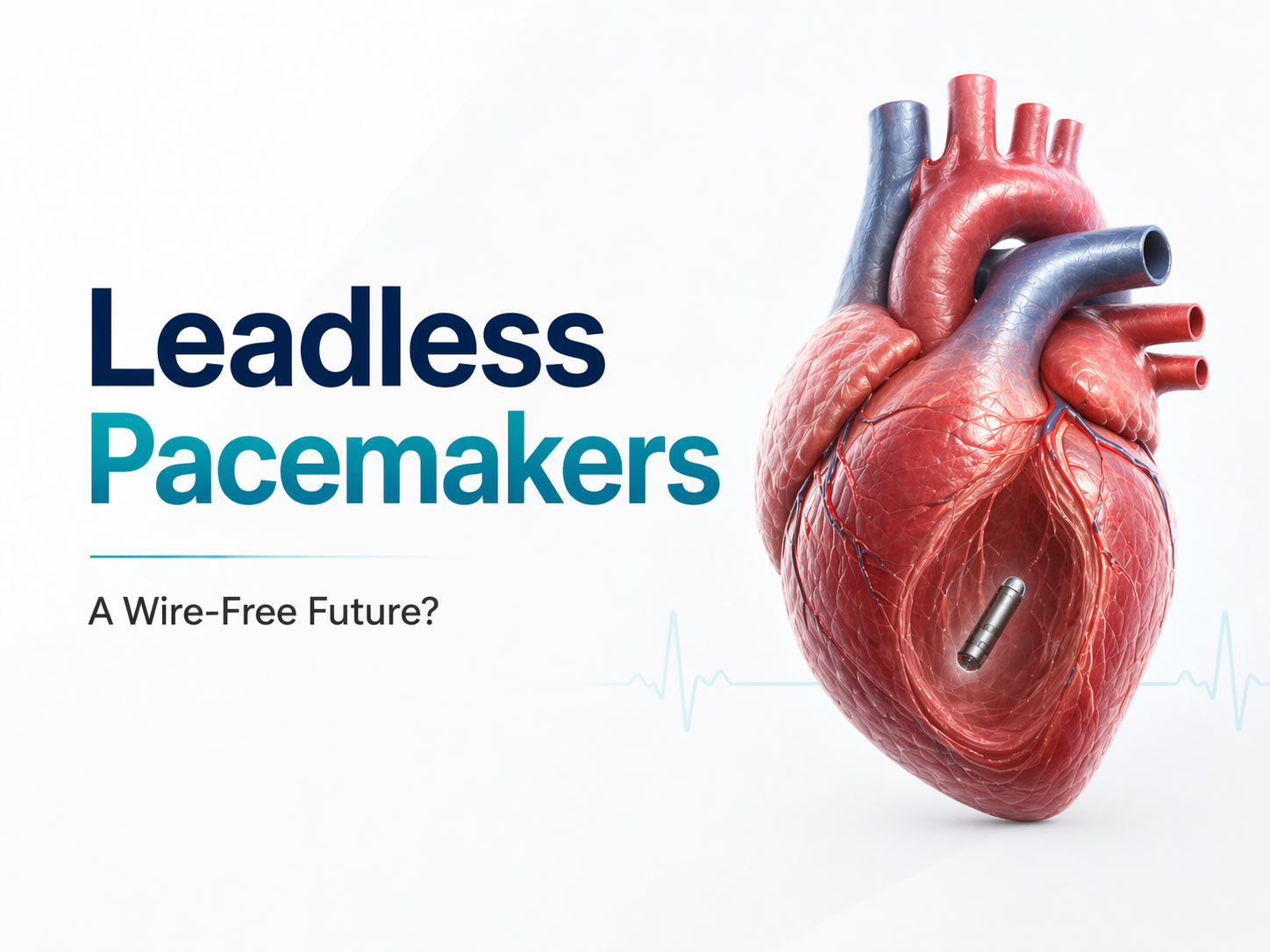
A leadless pacemaker is a one-piece device implanted inside the heart. It helps correct slow heart rhythms by sending small electrical impulses when the heart’s natural rhythm becomes too slow.
What Is a Leadless Pacemaker?
A leadless pacemaker is a miniature pacemaker that sits directly inside the heart, usually in the right ventricle. Unlike a traditional pacemaker, it does not need a visible chest incision, a generator pocket under the skin, or long pacing wires.
In a conventional pacemaker, the pulse generator is usually placed under the skin below the collarbone. Leads then run through a vein into the heart. These leads help deliver electrical signals, but over time they may be associated with complications such as lead fracture, lead dislodgement, infection, or pocket-related problems.
This is why leadless pacing is often described as a wire-free pacemaker solution.
Why Are Leadless Pacemakers Considered a Modern Breakthrough?
Leadless pacemakers are important because they simplify the structure of the device. Instead of a generator plus wires, the entire pacing system is contained in a capsule-like device.
This can offer several patient-focused advantages:
No visible chest lump
No chest pocket
No traditional pacemaker leads
No long wire running through the vein into the heart
Smaller device footprint
Potentially fewer lead- and pocket-related concerns
Faster recovery in selected patients
For many patients in Hyderabad and Secunderabad, the idea of a smaller, less visible pacemaker can feel more reassuring. However, the decision should always be made after a detailed evaluation by a qualified cardiac electrophysiologist.
How Is a Leadless Pacemaker Implanted?
The procedure is usually performed through a minimally invasive catheter-based technique. Instead of making a chest incision, the doctor accesses a vein in the groin, usually the femoral vein. A thin tube called a catheter is guided toward the heart using imaging support. The leadless pacemaker is then positioned inside the heart and tested to ensure proper function.
Because there is no chest pocket, patients do not have the same visible pacemaker bulge that is often seen with traditional systems. This can be helpful for comfort, appearance, and lifestyle confidence.
Leadless Pacemakers vs Traditional Pacemakers
Traditional pacemakers are still highly effective and remain the right choice for many patients. However, leadless pacemakers provide an alternative for carefully selected cases.
A traditional pacemaker generally includes:
A generator placed under the skin
One or more leads placed into the heart
A chest incision and pocket
Long-term lead monitoring
A leadless pacemaker generally includes:
A single miniaturized device
Direct placement inside the heart
No traditional leads
No chest pocket
No visible chest scar from generator placement
This difference is not just cosmetic. Traditional leads and pockets can be sources of complications in some patients. By removing these components, leadless pacemakers may reduce certain lead- and pocket-related concerns.
Who May Benefit from a Leadless Pacemaker?
Leadless pacemakers may be considered for patients with certain slow heart rhythm conditions, also known as bradyarrhythmias. These may include selected patients with slow heart rate, pauses, atrial fibrillation with slow ventricular response, or certain types of heart block.
However, not everyone is a candidate. Some patients need dual-chamber pacing, defibrillator support, cardiac resynchronization therapy, or a different rhythm management device. Suitability depends on medical history, heart rhythm, heart structure, test results, and future pacing requirements.
This is where the role of an experienced Pacemaker Specialist in Hyderabad becomes very important. The doctor must evaluate the patient’s ECG, Holter report, echocardiogram, symptoms, medical history, age, rhythm pattern, and future pacing needs before recommending the right device.
The Role of a Cardiac Electrophysiologist
A cardiac electrophysiologist is a cardiologist who specializes in the heart’s electrical system. While a general cardiologist manages many heart conditions, an electrophysiologist focuses on rhythm disorders, pacemakers, ICDs, ablation procedures, and device-based therapy.
For patients considering a Leadless Pacemaker in Hyderabad, consultation with a cardiac electrophysiologist helps ensure that the device choice is based on rhythm diagnosis, long-term pacing requirement, anatomy, lifestyle, and safety considerations.
Dr Chandra Mouli S Mantravadi, Consultant Cardiologist, Cardiac Electrophysiologist & Device Specialist at Yashoda Hospitals, Secunderabad, brings specialized rhythm expertise to patients dealing with slow heart rhythms, pacemaker evaluation, and advanced cardiac device decisions.
Dual-Chamber Leadless Pacing: The Next Big Step
Earlier leadless pacemakers were mainly used for single-chamber pacing. This means they were most suitable for patients who required pacing support in one chamber of the heart. But newer technology is moving toward dual-chamber leadless pacing, where two small leadless devices communicate wirelessly to coordinate the upper and lower chambers of the heart.
This is important because many patients need atrioventricular synchrony, also called AV synchrony. In simple terms, AV synchrony means the upper chamber and lower chamber of the heart beat in a coordinated sequence. Good coordination helps the heart pump more efficiently.
Newer dual-chamber leadless pacing systems have shown strong AV synchrony results in recent clinical studies. This does not mean every patient should receive a dual-chamber leadless pacemaker, but it shows that the field is progressing quickly. The future of pacing is becoming smaller, smarter, and more personalized.
Benefits of Leadless Pacemakers
The major benefit of leadless pacemakers is the avoidance of traditional leads and chest pockets. This can help reduce some concerns related to pocket infection, pocket pain, visible swelling, lead dislodgement, and lead fracture.
Other possible benefits include:
Smaller device size
Less visible implant
No chest pocket scar
No traditional wire-related issues
Potentially fewer upper-body movement restrictions after implantation
Useful option for selected patients with venous access issues or higher pocket infection risk
For patients who are worried about visible scars, device bulges, or lead-related complications, a leadless pacemaker may be an important option to discuss with a specialist.
Are There Any Risks?
Yes. Leadless pacemakers are advanced, but they are still medical implants. Like any procedure, they carry risks. Possible concerns include bleeding or swelling at the groin access site, device positioning issues, vascular complications, heart puncture, pericardial effusion, or rare cardiac tamponade.
This is why patient selection and procedural expertise are crucial. A leadless pacemaker should be recommended only after a careful benefit-risk assessment.
Why This Matters for Patients in Hyderabad
Hyderabad has become a major center for advanced cardiac care, including rhythm management, pacemaker implantation, electrophysiology, and device-based heart treatments. Patients today are not only looking for treatment; they are looking for safer technology, faster recovery, expert evaluation, and long-term care.
For someone searching online for a Pacemaker Doctor in Hyderabad or Cardiac Electrophysiologist in Hyderabad, it is important to understand that the “best” pacemaker is not always the newest device. The right pacemaker is the one that matches the patient’s rhythm problem, heart function, lifestyle, anatomy, and long-term health needs.
A traditional pacemaker may be ideal for one patient. A leadless pacemaker may be better for another. A dual-chamber device, ICD, or CRT device may be required in other cases. The key is expert diagnosis.
When Should You See a Pacemaker Specialist?
You should consult a cardiologist or electrophysiologist if you experience:
Repeated dizziness
Fainting episodes
Very slow heartbeat
Unexplained fatigue
Shortness of breath
Palpitations with weakness
Heart block on ECG
Pauses seen on Holter monitoring
Existing pacemaker-related issues
Need for pacemaker replacement or upgrade
Early evaluation can help prevent complications related to untreated rhythm disorders.
Conclusion
Leadless pacemakers represent a major shift in cardiac rhythm care. By avoiding traditional leads and chest pockets, they offer a modern, compact, and less visible pacing solution for selected patients. With newer dual-chamber leadless pacing showing strong AV synchrony results, the future of pacemaker technology is clearly moving toward smaller, smarter, and more wire-free systems.
For patients looking for a Leadless Pacemaker in Hyderabad, the most important step is not simply choosing the latest device. It is choosing the right specialist who can evaluate whether this technology is appropriate for your specific heart rhythm condition.
Under the care of an experienced cardiac electrophysiologist like Dr Chandra Mouli S Mantravadi, patients can receive expert guidance on pacemaker options, rhythm diagnosis, and advanced device-based treatment at Yashoda Hospitals, Secunderabad.
FAQs
1. What is a leadless pacemaker?
A leadless pacemaker is a small, self-contained pacemaker placed directly inside the heart. It does not need traditional wires, a chest pocket, or a visible generator under the skin.
2. Is a leadless pacemaker available in Hyderabad?
Advanced cardiac rhythm treatments, including pacemaker evaluation and device-based therapies, are available in Hyderabad and Secunderabad. Patients should consult a cardiac electrophysiologist to know whether a leadless pacemaker is suitable for them.
3. Who is the right candidate for a leadless pacemaker?
Patients with selected slow heart rhythm conditions may be candidates. Suitability depends on the type of rhythm problem, heart structure, pacing requirement, medical history, and future device needs.
4. Is a leadless pacemaker better than a traditional pacemaker?
It is not better for everyone. Leadless pacemakers avoid leads and chest pockets, but traditional pacemakers are still the right choice for many patients, especially those needing specific dual-chamber or advanced pacing functions.
5. Does a leadless pacemaker require open-heart surgery?
No. It is usually implanted through a catheter-based procedure using a vein in the groin. The device is guided into the heart and positioned without a chest pocket.
6. What are the benefits of a leadless pacemaker?
Benefits may include no chest pocket, no traditional pacing leads, no visible chest lump, smaller device size, and reduced lead- or pocket-related concerns in selected patients.
7. What are the risks of a leadless pacemaker?
Possible risks include bleeding, swelling at the access site, device movement, heart puncture, or rare internal bleeding around the heart. A specialist will explain these risks before the procedure.
8. What is dual-chamber leadless pacing?
Dual-chamber leadless pacing uses two small leadless devices that communicate wirelessly to coordinate the upper and lower chambers of the heart. Recent studies have shown strong AV synchrony results in selected patients.
9. Which doctor should I consult for pacemaker treatment in Hyderabad?
You should consult a cardiac electrophysiologist or device specialist. These doctors specialize in heart rhythm problems, pacemakers, ICDs, and advanced cardiac rhythm devices.
10. Where can I consult Dr Chandra Mouli S Mantravadi?
You can consult Dr Chandra Mouli S Mantravadi at Yashoda Hospitals, Secunderabad, for cardiac rhythm evaluation, pacemaker consultation, and device-related care.
Doctor Details
Dr Chandra Mouli S Mantravadi
Consultant Cardiologist
Cardiac Electrophysiologist & Device Specialist
Yashoda Hospitals, Secunderabad